
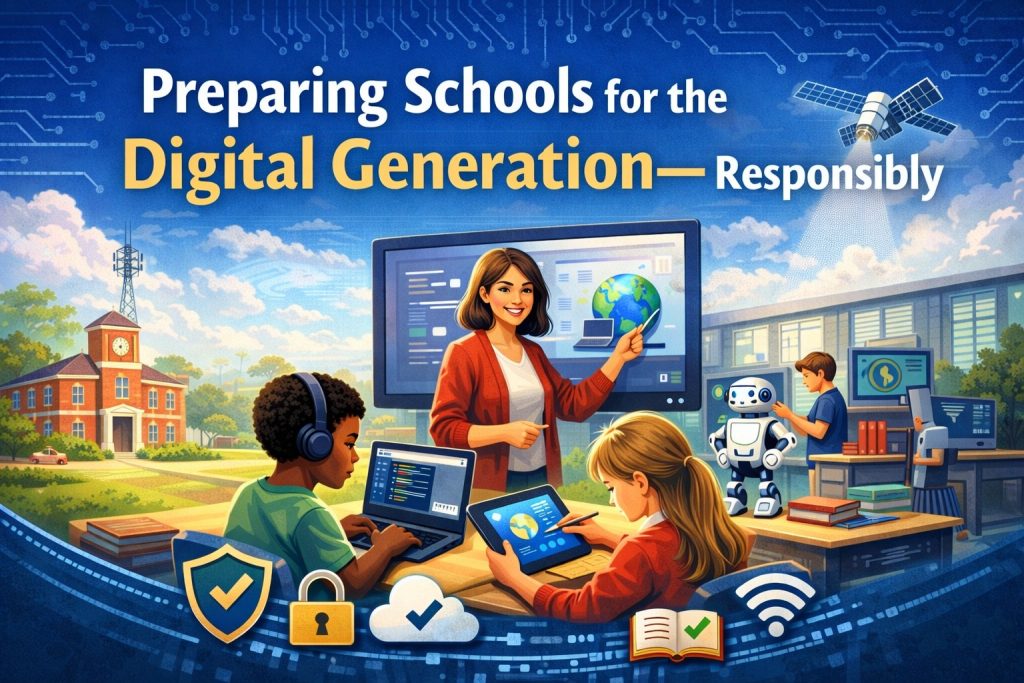

We are living in a defining era of education—one where the digital world is not a future possibility but a present reality. Today’s learners are growing up in an environment shaped by screens, speed, and seamless access to information. As educators and school leaders, our responsibility is not merely to introduce technology into classrooms, but to prepare our schools—and our children—to engage with the digital generation responsibly, ethically, and purposefully.
Beyond Smart Classrooms: Smart Thinking
Digital education is often equated with smart boards, tablets, and online platforms. While these tools are important, true digital readiness goes far beyond infrastructure. It lies in cultivating smart thinking—the ability to question information, think critically, collaborate meaningfully, and use technology as an enabler rather than a distraction.
At school, technology must support learning outcomes, not replace human connection. Teachers remain mentors, role models, and facilitators of curiosity. Digital tools should amplify their impact, allowing personalised learning and global exposure—while keeping pedagogy at the core.
Digital Literacy as a Life Skill
For the digital generation, literacy is no longer limited to reading and writing. Digital literacy—the ability to evaluate online content, understand digital footprints, practice cyber safety, and behave responsibly in virtual spaces—is an essential life skill.
Schools must intentionally integrate digital citizenship into their curricula.
Children need to learn:
*How to distinguish FACT from MISINFORMATION
*How to communicate respectfully online
*How to protect privacy and personal data
*How to use technology ethically, lawfully and responsibly
Preparing students for the digital world also means preparing them to be responsible digital citizens. While technology offers immense opportunities, it also poses significant challenges—such as screen dependency, reduced attention spans, and social isolation. A responsible approach demands balance.
Schools must model healthy digital habits by:
Encouraging age-appropriate screen time. Even for the online classes, the time span for the classes is to be thoughtfully planned as per the age-appropriateness. The important thing is promoting physical activity, arts, and face-to-face connections. Sensitising students to the importance of mental and emotional well-being
Empowering Teachers for the Digital Age
No digital transformation can succeed without empowered teachers. Continuous professional development is essential to help educators confidently integrate technology, adapt to evolving tools, and manage digitally diverse classrooms.
When teachers are digitally confident, students benefit from learning environments that are innovative, inclusive, and future-ready—yet grounded in values.
Partnership with Parents
Preparing schools for the digital generation is a shared responsibility. Parents are vital partners in reinforcing responsible digital behaviour at home. Creating screen-free spaces and moments, having open dialogues – awareness interactions between school and home, helps children navigate the digital world with maturity and restraint.
Education with Values at the Core
Technology is powerful—but values give it direction. As schools embrace digital advancement, we must ensure that integrity, empathy, respect, and responsibility remain at the heart of education.
Our aim is not just to create digitally skilled students, but digitally wise individuals—learners who use technology to solve problems, contribute positively to society, and lead with conscience.
As Chairman of Prudence Group of Schools, I firmly believe that when schools blend innovation with intention, and technology with values, we prepare our children not only for the digital generation, but for a meaningful, responsible, and humane future.
Because the FUTURE IS DIGITAL, but EDUCATION MUST ALWAYS BE HUMAN.
Education must nurture not only SHARP MINDS, but also HEALTHY BODIES and KIND HEARTS.